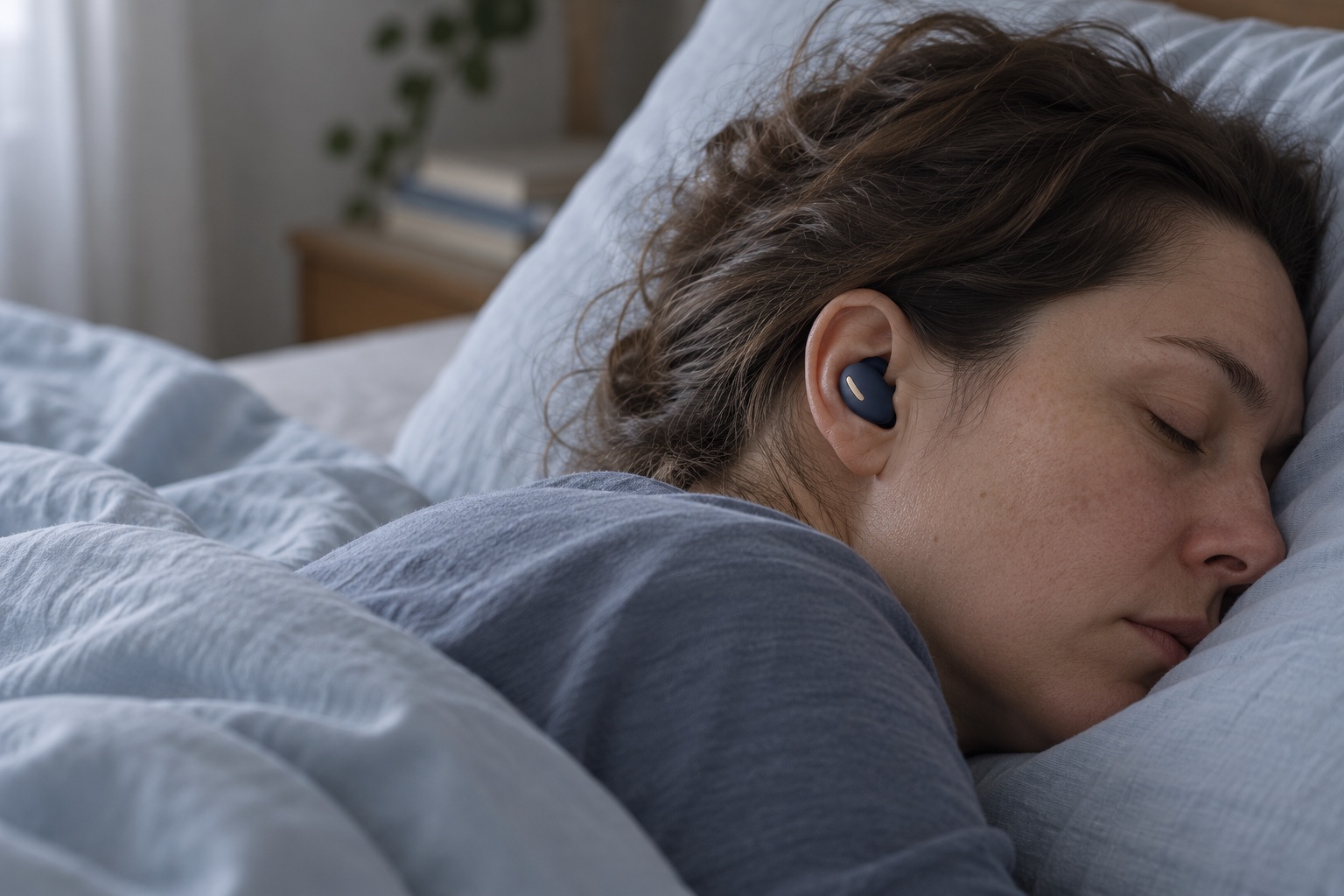
There is no single fit or volume setting that makes overnight earbud use suitable for everyone. Consider pressure, sound exposure and care separately. A product described as a sleep earbud still needs to feel comfortable in your ears.
Why do your ears hurt after sleeping with earbuds?
Pressure can irritate the ear, especially against a pillow. Earbuds may also push wax inward or trap moisture. Cleveland Clinic discusses these concerns in its guidance on sleeping with earbuds. [source]
Try the fit while awake and remove the earbuds if they hurt. Do not use discomfort as evidence that you need to push the tip farther in. If symptoms persist, seek advice about the symptom before continuing overnight use.
What volume is safe for overnight listening?
The World Health Organization explains that hearing risk depends on sound level, exposure duration and how often exposure occurs. Lower volume and shorter listening time reduce exposure. Persistent ringing or hearing difficulty deserves assessment. [source]
A slider position does not measure the sound reaching your ear. The recording, device, fit and phone settings can all change it. “Twenty percent” on one setup is not a universal safety threshold.
Start low while you are awake. If a timer is available, consider whether you only want playback while settling down. If you need to keep increasing the sound to cover the room, reconsider the source of the disturbance and your chosen setup.
Build care into the routine
Read the cleaning instructions for the exact model, including the removable tips and case. Check which parts can be washed and which must stay dry. Keep those instructions with the product information so that you do not have to improvise a cleaning method later.
Before inserting the earbuds, inspect them for visible dirt or damage. A case with a clear place for each bud makes it easier to notice a missing tip. Replacement tips should be compatible with the product.
Keep a simpler option available
If the ear contact is the problem, a bedside speaker may suit a wind-down routine. If audio is unnecessary, you can compare passive plugs. Consider what you need to hear overnight in either case, including alarms and people who depend on you.
Read our side-sleeper buying guide for a practical pillow fit check.
Sources and further reading
- Is It OK To Sleep With Earbuds In?Cleveland Clinic. 8 April 2026; clinical education article.
- Deafness and hearing loss: Safe listeningWorld Health Organization. 6 March 2026; general safe-listening guidance, not an overnight earbud prescription.
Prepared by Dozemere. Sources checked on 25 October 2026. How we write about sleep.